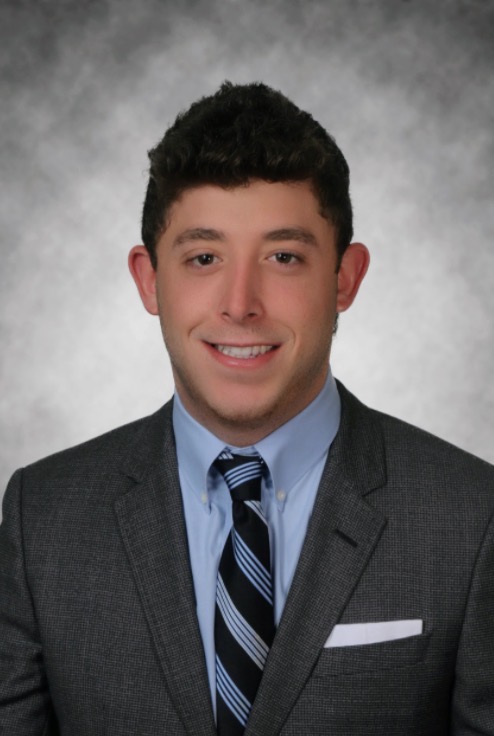
Hi, I'm Teddy.
I'm a solo developer based in Bergen County, New Jersey. I built SoilIQ because I couldn't find an app that told me what I actually needed to know about my lawn — and I suspect I'm not the only one who's stood there looking at their yard thinking: what do I need to do next to get this looking as perfect as possible, and when is the exact right time to do it?
It started with a lawn in Bergen County that refused to cooperate.
I'd overseeded every fall and every spring for two years. I was doing everything "right" — the right seed, the right fertilizer, the right watering schedule. The results were inconsistent in a way that made no sense on paper. Some patches would take beautifully. Others would sit dormant for weeks, then suddenly catch up, or not catch up at all.
The variable nobody was talking about was soil temperature. Grass seed doesn't germinate because it's October 1st — it germinates when the soil at seed depth crosses its threshold temperature, stays there, and accumulates enough heat. The calendar is a proxy for the soil. A rough one.
I started looking for an app that would just tell me the actual soil temperature at my location, at multiple depths, with a forecast. Something that could answer the question "is now a good time to seed, or should I wait five more days?" I couldn't find one that worked well. So I built it.
What started as a tool for my own lawn became something I shipped to the App Store. Then growers — real farmers and gardeners, not just lawn people — started using it and asking for more. More crops. More depth. More forecast. That feedback is what became SoilIQ 2.0.
One developer. No investors. No growth team. Just the product.
SoilIQ is not a VC-funded startup with a team of engineers optimizing for DAUs and engagement loops. It's one person building something genuinely useful and charging a fair price for the parts that cost money to run.
Where the project is going.
SoilIQ isn't a side project I'll abandon when I get bored. It's a product I use myself, every season. Here's what's already shipped and what's planned.
v1.0 → v1.3 — Web-wrapped MVP
Four-depth soil temperature, custom soil thermal model, NWP artifact correction, precipitation cooling, basic widgets. Proven the concept, found the audience.
v2.0 — Ground-up Native Rebuild
Full SwiftUI rewrite. PlantAI with 130+ crops, 14-day forecast, three-tier frost alerts, Apple Watch app, Live Activity, home screen widgets, iPad support, soil journal, probe calibration, Soil Health Score, GDD tracking.
Android — Planned for 2027
The most-requested feature from people who don't have iPhones. SoilIQ will come to Android. The data model is platform-agnostic; it's a matter of building the native UI.
Expanded Crop Database — 2026 onward
130+ crops is a good start. There are hundreds more — specialty vegetables, fruit trees, cover crop mixes, turfgrass varieties — that deserve their own data. Ongoing, each release.
International Expansion — 2027–2028
SoilIQ already works globally — the soil model runs anywhere. But the crops, planting guidance, and UX are built around North American growing conditions. Proper international support means localization, regional crop databases, and growing season logic.
Deeper Soil Science — Longer horizon
Nutrient availability windows, soil respiration modeling, mycorrhizal activity indicators — soil biology matters as much as temperature. This is a multi-year research project as much as an engineering one.
Questions, feedback, or a great feature idea?
I read every email and reply within 24 hours, usually faster. Feature requests go into the same backlog that produced PlantAI, the Watch app, and probe calibration. If you've found a bug or have a thought, reach out directly.